Pay stubs are the income document everyone trusts and almost no one can verify on sight. A genuine stub and a fake one generated from a $10 online template look identical in a PDF viewer, which is exactly why fake stubs have become a mainstream fraud tool.
This guide is for HR and payroll teams that issue pay stubs. It explains what a verifiable pay stub is, how to issue one, and how it protects both the employer and the employee whose income is being checked.
What is a verifiable pay stub?
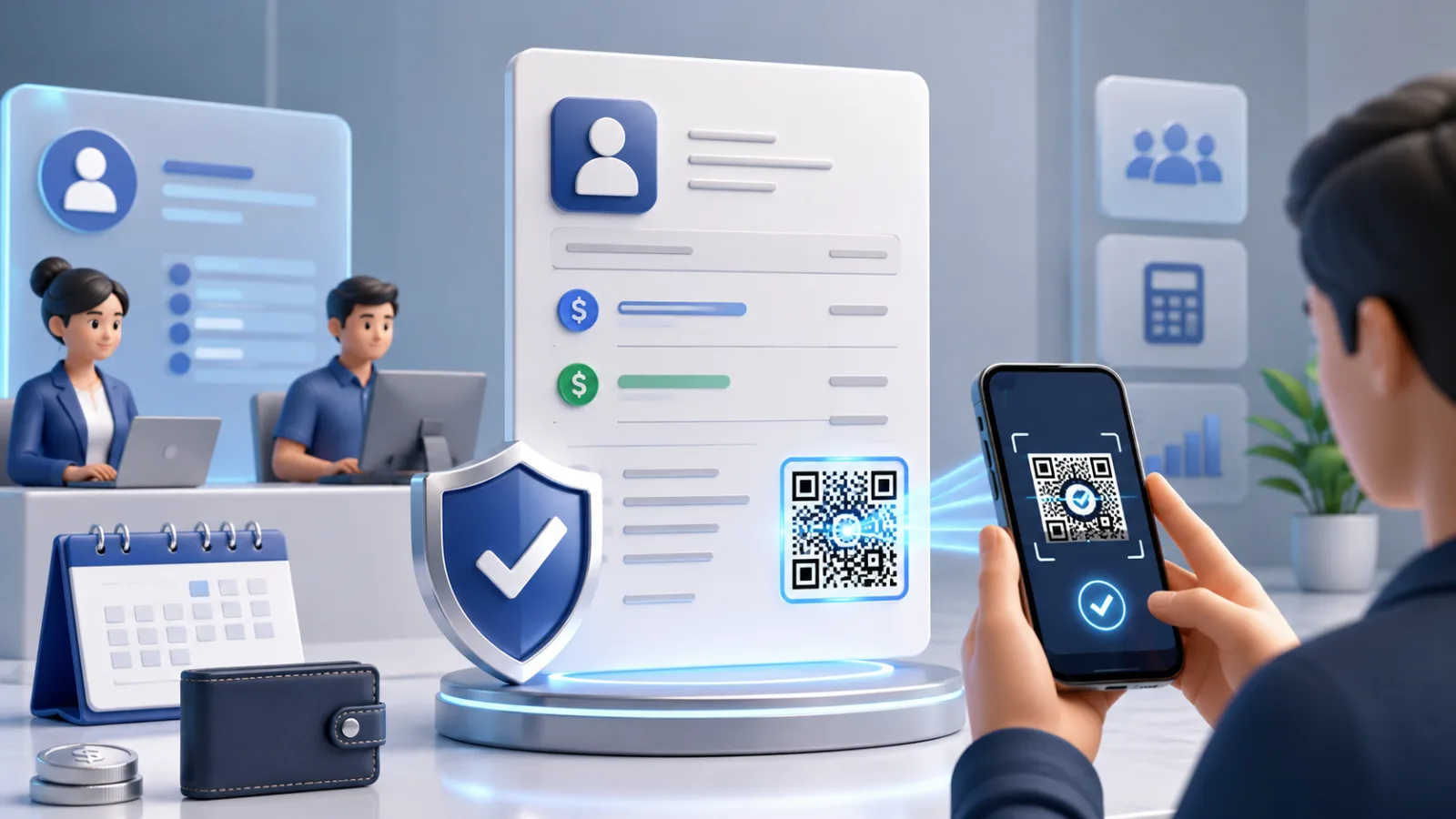
A verifiable pay stub is a pay stub issued with an attached QR code and a hosted, issuer-controlled proof page, so any recipient can confirm the stub is authentic and unaltered without contacting the employer. Rather than judging the document by its layout, the recipient scans the code and reaches a record on the employer's or payroll provider's infrastructure that confirms whether that exact stub was issued. Because the proof sits outside the file, editing the PDF — changing gross pay, an employer name, or a date — does not change the verification result; the altered copy simply fails. VerifyDoc.ai delivers this with cryptographic hashing, a certificate of authenticity, and a tamper-evident audit trail, and recipients verify with no login or app.
Why do HR and payroll teams need verifiable pay stubs?
Because fake pay stubs are cheap, widespread, and increasingly hard to detect, and the employer's name is what fraudsters borrow. Some lenders report that as many as 1 in 5 pay stubs they receive are forged or generated online, and separate analysis found roughly 1 in 12 paycheck stubs submitted to lenders is fake (Point Predictive). The wider trend reinforces the risk: digital document forgeries rose 244% year over year in 2024 and became the majority of all document fraud (Entrust 2025 Identity Fraud Report). When a forged stub carries your company's name, your payroll team fields the verification calls and absorbs the reputational hit. Issuing verifiable stubs removes both problems.
How do you issue a verifiable pay stub?
You issue a verifiable pay stub by generating it through a verification layer that attaches a unique QR code and registers a hosted proof record at the moment the stub is produced. With VerifyDoc.ai, each stub is cryptographically hashed and linked to an issuer-controlled proof page, so the employee receives a normal-looking PDF that any third party can independently check. The payroll team does nothing extra at verification time — recipients self-serve. This also gives the employer a clean audit trail of what was issued and when. For the recipient's side of the flow, see the step-by-step guide to verifying a QR-coded document, and the pillar on how to verify document authenticity.
Manual income verification vs verifiable pay stubs: which is faster and cheaper?
Verifiable pay stubs are dramatically faster and cheaper because they move the check to the recipient and return a result in seconds. Manual employment and income verification typically costs $60-$125 or more per request and takes one to five business days, and automated databases clear only about 30-35% of requests (industry pricing, Truework).
| Factor | Manual / database verification | Verifiable pay stub |
|---|
| Cost per request | $60-$125+ | Included at issuance |
|---|
| Time to result | 1-5 business days | Seconds |
|---|
| Recipient self-serve? | No | Yes |
|---|
| Detects an edited stub? | Often not | Yes |
|---|
| Coverage | ~30-35% auto-cleared | Every issued stub |
|---|
Where does VerifyDoc.ai fit for payroll teams?
VerifyDoc.ai fits anywhere a pay stub leaves the building and has to be trusted by someone else — mortgage and auto lending, rental applications, background checks, and immigration filings. It attaches QR-backed verification, a hosted proof page, and a certificate of authenticity to each stub so recipients confirm authenticity independently, which cuts inbound verification calls and shuts down forged copies using your name. Teams that issue pay stubs usually issue other income and employment documents too, so the same model extends to verifiable bank statements and verifiable employment-verification letters. To see what fake stubs look like, read how to spot an AI-generated pay stub in 2026.