An employment-verification letter exists to answer one question for a third party: does this person really work here, on these terms? Yet the letter itself is just a PDF on company letterhead, which anyone can fabricate or alter in minutes.
This guide explains why verifiable employment-verification letters are becoming the 2026 standard, what makes a letter verifiable, and how HR teams can issue letters recipients can confirm without ever calling the front desk.
What is a verifiable employment-verification letter?
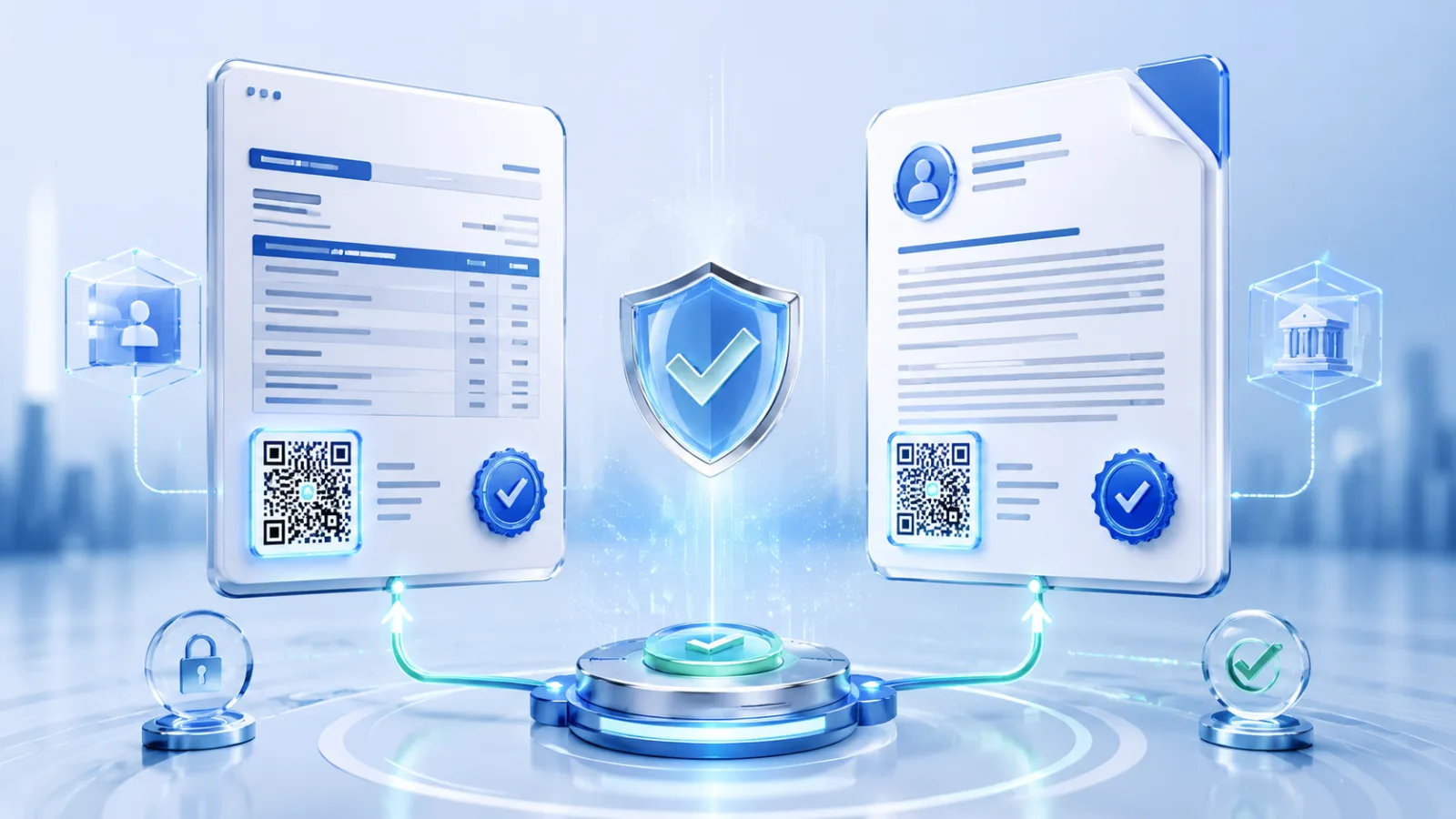
A verifiable employment-verification letter is a letter issued with an attached QR code and a hosted, issuer-controlled proof page, so any recipient can confirm the letter is genuine and unaltered without contacting HR. Instead of trusting the letterhead and a signature, the recipient scans the code and reaches a record on the employer's infrastructure that confirms the specific letter was issued and remains valid. Because the proof lives outside the document, editing the salary, title, or dates on the PDF does not change the result — the altered copy fails verification. VerifyDoc.ai provides this through cryptographic hashing, a certificate of authenticity, and a tamper-evident audit trail, with no login or app required for the recipient. This is the same model used for verifiable pay stubs.
Why is verifiability becoming the 2026 standard for these letters?
Because manual verification is slow and expensive, and forged employment letters are now easy to produce. Manual employment and income verification typically costs $60-$125 or more per request and takes one to five business days, while automated databases clear only about 30-35% of requests (industry pricing, Truework). At the same time, fake credentials are surging — digital document forgeries rose 244% year over year in 2024 and became 57% of all document fraud (Entrust 2025 Identity Fraud Report). Employment scams compound the pressure: U.S. consumer losses to job and employment scams rose from $90 million in 2020 to $501 million in 2024 (FTC). A letter that proves itself is the only scalable answer.
How does an HR team issue a verifiable employment-verification letter?
An HR team issues a verifiable letter by generating it through a verification layer that attaches a unique QR code and registers a hosted proof record when the letter is created. With VerifyDoc.ai, the letter is cryptographically hashed and linked to an issuer-controlled proof page, so the employee receives a standard letter that any third party can independently verify. HR does nothing at verification time because recipients self-serve, and the employer keeps an audit trail of every letter issued. The same issuance workflow that produces verifiable letters also covers offer letters — see the HR playbook for tamper-proof offer letters and the employment offer letters industry page.
Manual verification vs verifiable letters: how do they compare?
Verifiable letters return a result in seconds at no per-request cost, while manual verification is slow, expensive, and incomplete. The contrast is clearest across cost, speed, and whether the recipient can act alone.
| Factor | Manual / database verification | Verifiable employment letter |
|---|
| Cost per request | $60-$125+ | Included at issuance |
|---|
| Time to result | 1-5 business days | Seconds |
|---|
| Recipient self-serve? | No | Yes |
|---|
| Detects an edited letter? | Often not | Yes |
|---|
| Coverage | ~30-35% auto-cleared | Every issued letter |
|---|
For the wider comparison of verification approaches, see the pillar on how to verify document authenticity.
Where does VerifyDoc.ai fit for HR and people teams?
VerifyDoc.ai fits wherever HR issues a letter that a lender, landlord, immigration authority, or background checker must trust. It attaches QR-backed verification, a hosted proof page, and a certificate of authenticity to each letter so recipients confirm authenticity independently, which removes inbound verification calls and shuts down forged letters bearing the company name. Because people teams issue a range of documents, the same approach extends to verifiable bank statements for proof-of-funds requests and to offer letters at the hiring stage. The result is a single, consistent way to issue documents employees can actually prove are real.